Why Are Seat-type Damping Spring Vibration Isolators Essential for Efficient Waste Heat Recovery Cooler Operation?
Vibrations and noise threaten cooler efficiency, equipment lifespan, and operational comfort—but seat-type damping spring vibration isolators solve this effortlessly.
Seat-type Damping Spring Vibration Isolators stabilize Waste Heat Recovery Coolers by absorbing axial, lateral, and impact vibrations. They optimize thermal efficiency, reduce noise, and prolong equipment life, making them indispensable for industrial cooler vibration control.
Let’s explore how these isolators protect and enhance cooler performance.
What is a seat-type damping spring vibration isolator, and how does it work?
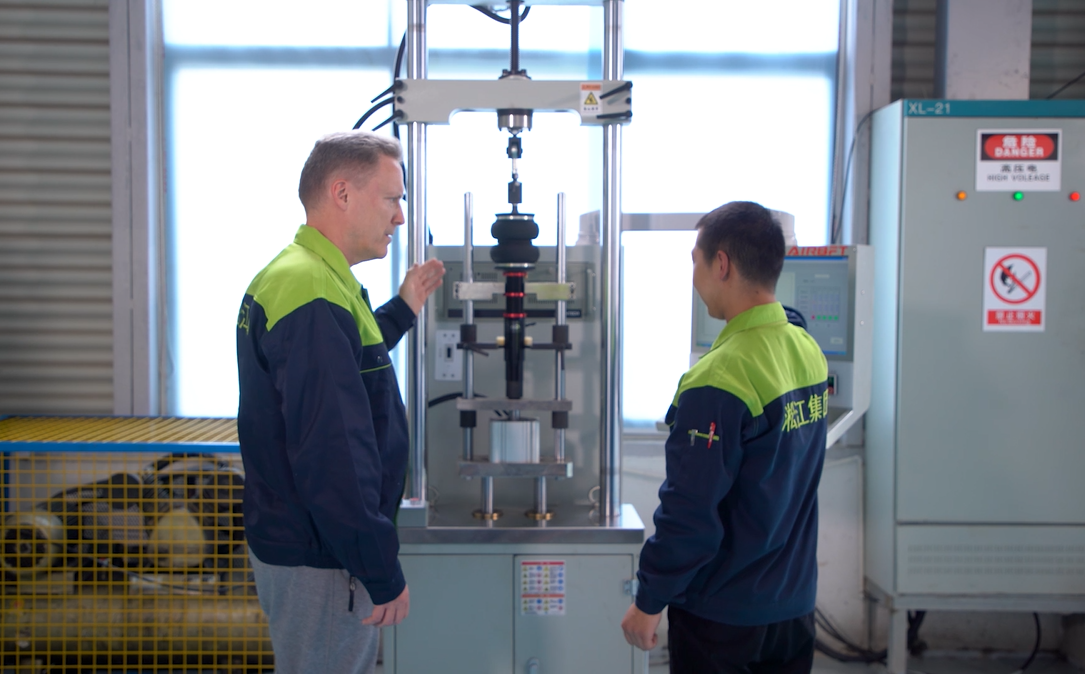
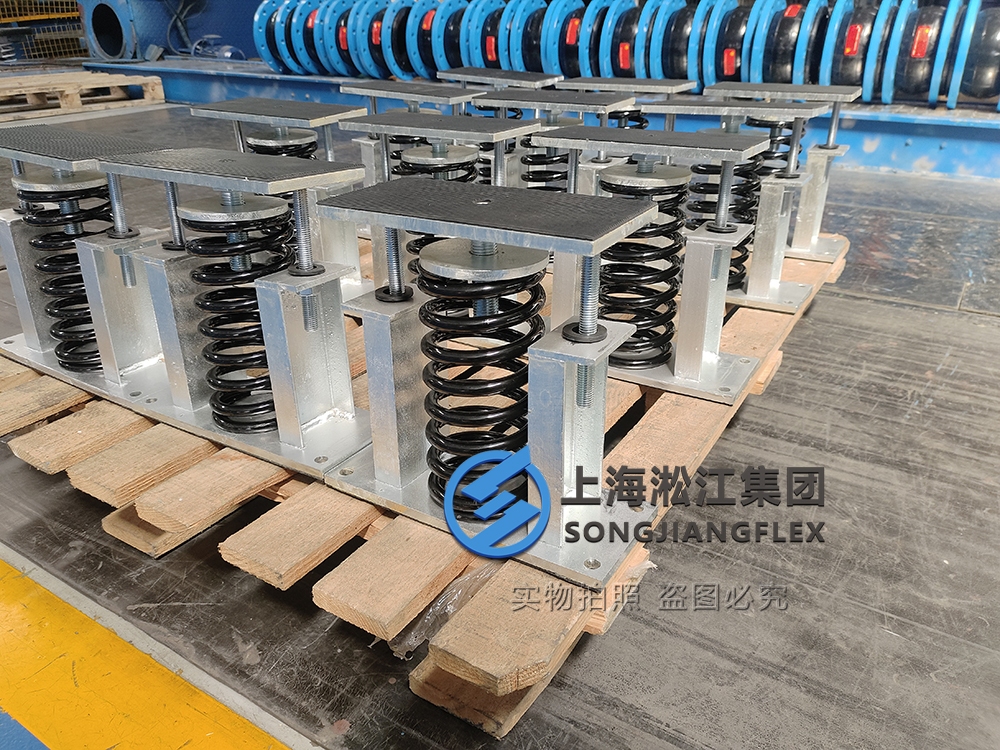
A Seat-type Damping Spring Vibration Isolator combines high-elasticity springs with damping materials to absorb mechanical vibrations and shocks, ensuring heat exchangers operate smoothly.
Its spring-damper mounting system offers multi-directional vibration isolation, providing reliable elastic support for heat recovery systems and effective industrial cooler vibration control.
Internally, these isolators feature steel springs with rubber or elastomeric damping layers. They convert vibration energy into heat, minimizing transmission to the cooler frame and piping. Installation flexibility allows adaptation to various cooler sizes and load conditions, ensuring stable performance even under continuous operation.
What types of vibration and noise are generated during the operation of a waste heat recovery cooler?
Waste Heat Recovery Coolers produce axial, lateral, and impact vibrations due to fluid flow, fan operation, and structural resonance, accompanied by significant noise.
Uncontrolled vibrations reduce thermal efficiency and increase operational noise, affecting both performance and workplace comfort. Noise reduction in cooling systems is critical for industrial settings.
Flow-induced turbulence, pump-induced oscillations, and fan blade movement all contribute to vibration. Without proper isolation, these vibrations transmit through heat exchangers, piping, and supporting structures, leading to accelerated wear and energy loss. Seat-type damping spring isolators are designed to mitigate all these vibration sources.
How does a seat-type damping spring vibration isolator absorb axial, lateral, and impact vibrations in heat exchangers?
The combination of elastic springs and damping layers allows these isolators to absorb multi-directional vibrations, including axial thrust, lateral sway, and sudden impacts.
This axial and lateral vibration absorption ensures smooth operation of Waste Heat Recovery Coolers, while providing reliable elastic support for heat recovery systems.
The spring compresses under axial loads, while lateral movements are countered by shear in the elastomer layer. Impact energy is dissipated through damping material deformation, protecting heat exchanger components and connected piping from fatigue and failure.
How does using vibration isolators affect the thermal efficiency of a waste heat recovery cooler?
Vibration isolation minimizes mechanical energy loss, allowing heat exchangers to transfer energy more efficiently, directly improving thermal performance.
Vibration isolation for heat exchangers reduces energy dissipation and optimizes thermal efficiency, contributing to long-term operational savings.
Uncontrolled vibration can misalign heat exchanger plates or tubes, reducing contact efficiency. Seat-type damping spring isolators maintain alignment, lower mechanical stress, and ensure consistent fluid flow, enabling better heat transfer and lower energy consumption.
How can seat-type damping spring vibration isolators extend the service life of the cooler and connected piping?
By absorbing vibrations, these isolators reduce stress, fatigue, and wear on both the cooler and the piping network.
Prolonging equipment life is a key advantage, especially in high-temperature or high-pressure environments common in industrial heat recovery systems.
The isolator protects joints, flanges, and welds from cyclic loading. Components experience less fatigue, reducing maintenance frequency and minimizing unplanned downtime, ensuring the cooler operates reliably for years.
What factors should be considered when selecting a vibration isolator, such as load, frequency, and installation environment?
Proper selection involves evaluating equipment weight, vibration frequency, temperature, and installation conditions to achieve optimal isolation.
Correctly matched isolators ensure effective industrial cooler vibration control and noise reduction in cooling systems.
Consideration includes load-bearing capacity, resonance avoidance, temperature limits, and space constraints. Selecting an isolator that fits these parameters maximizes axial and lateral vibration absorption without compromising structural integrity.
How do damping design and spring stiffness influence the vibration isolation performance?
Damping levels and spring stiffness dictate how vibrations are absorbed, the natural frequency of the system, and overall isolation efficiency.
Optimizing the spring-damper mounting system maximizes vibration reduction while maintaining stable cooler operation.
Soft springs with high damping absorb low-frequency vibrations effectively, while stiffer springs handle higher loads and impacts. Balancing these parameters prevents resonance and ensures smooth, continuous operation under varying workloads.
What advantages do seat-type spring isolators have compared to other vibration control solutions, such as rubber pads or air springs?
Compared to rubber pads or air springs, seat-type spring isolators provide multi-directional vibration absorption, durability, and high-temperature resilience.
High-temperature vibration isolators offer superior elastic support for heat recovery systems, making them ideal for industrial cooler vibration control.
While rubber pads absorb only small vibrations and air springs require maintenance, seat-type spring isolators handle axial, lateral, and impact loads, resist high temperatures, and maintain consistent isolation over long service periods.
How can the potential failure risks of the cooling system be evaluated if no vibration isolators are used?
Without vibration isolation, heat exchangers and piping face fatigue, loosening of flanges, and premature equipment failure.
Understanding these risks highlights why Seat-type Damping Spring Vibration Isolators are essential for Waste Heat Recovery Cooler reliability.
Failure modes include cracked welds, leaking joints, and damaged bearings. Proactive evaluation shows that ignoring vibration can lead to costly downtime and inefficient thermal performance.
Are there different materials or specialized designs of isolators suitable for high-temperature or high-pressure waste heat recovery coolers?
High-temperature or high-pressure applications require isolators made from specialized materials and design adaptations.
High-temperature vibration isolators maintain industrial cooler vibration control, ensuring reliable thermal efficiency optimization under extreme conditions.
Materials like heat-resistant elastomers, reinforced springs, and hybrid spring-damper configurations allow isolators to operate safely in elevated temperatures and pressures. Custom designs can address unique cooling system layouts and mechanical constraints.
Summary
Seat-type Damping Spring Vibration Isolators are key for efficient, quiet, and long-lasting Waste Heat Recovery Cooler operation.