What Is the Heart of a Rubber Vibration Table and Why Are Specialized Rubber Air Springs So Critical?
Struggling with unstable vibration tests? Traditional platforms fail to isolate vibration effectively. The heart of a rubber vibration table—the specialized rubber air spring—ensures precision, stability, and repeatable results across various industrial applications.
The specialized rubber air spring is the core component of a rubber vibration table, delivering superior vibration isolation, load control, and damping efficiency. Its performance guarantees precise measurements, consistent results, and reliable operation even in high-frequency, high-precision testing environments.
Let’s explore how rubber air springs function, their materials, and their critical role in precision vibration tables.
Why Are Rubber Air Springs Considered the Heart of a Rubber Vibration Table?
Rubber air springs concentrate load-bearing, vibration response, and isolation performance, making them indispensable for any precision vibration table. Without them, even the most sophisticated control system cannot prevent test data errors or resonance effects.
A specialized rubber air spring actively decouples vibration energy, regulates load dynamically, and controls natural frequency, ensuring smooth operation under variable conditions. High damping rubber and air chamber design allow it to absorb and dissipate energy efficiently, keeping sensitive equipment stable.
Unlike conventional rubber pads or metal springs, the specialized air spring provides both elasticity and adjustability. Its ability to maintain consistent vibration isolation under repeated cycles makes it the “heart” of the table, ensuring long-term performance and repeatable results for laboratory and industrial testing.
What Components Make Up a Rubber Vibration Table?
A rubber vibration table is a sophisticated assembly composed of a sturdy support frame, isolation system, precision sensors, control module, and, at the core, specialized rubber air springs. Each component plays a role, but the air springs determine the overall dynamic behavior.
The structural frame supports heavy loads and provides rigidity, while the vibration isolators prevent unwanted energy transmission. Sensors monitor vibrations and feed data to the control system, which works in conjunction with air springs to adjust damping and maintain stability. The air spring’s elasticity and load-adjusting capability allow the table to perform optimally across various test scenarios.
Other components, like high damping rubber pads and precision mounts, complement the air springs but cannot replace them. The synergy of all components ensures vibration isolation is consistent, enabling accurate and repeatable measurements in precision applications.
How Does a Rubber Air Spring Function in Vibration Isolation?
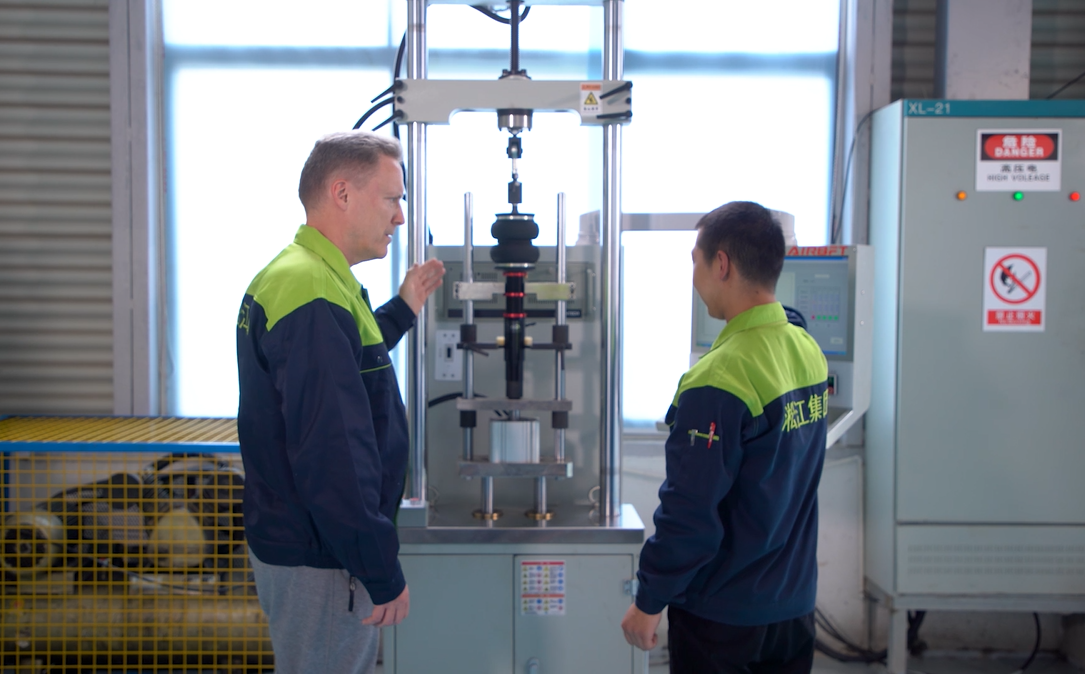
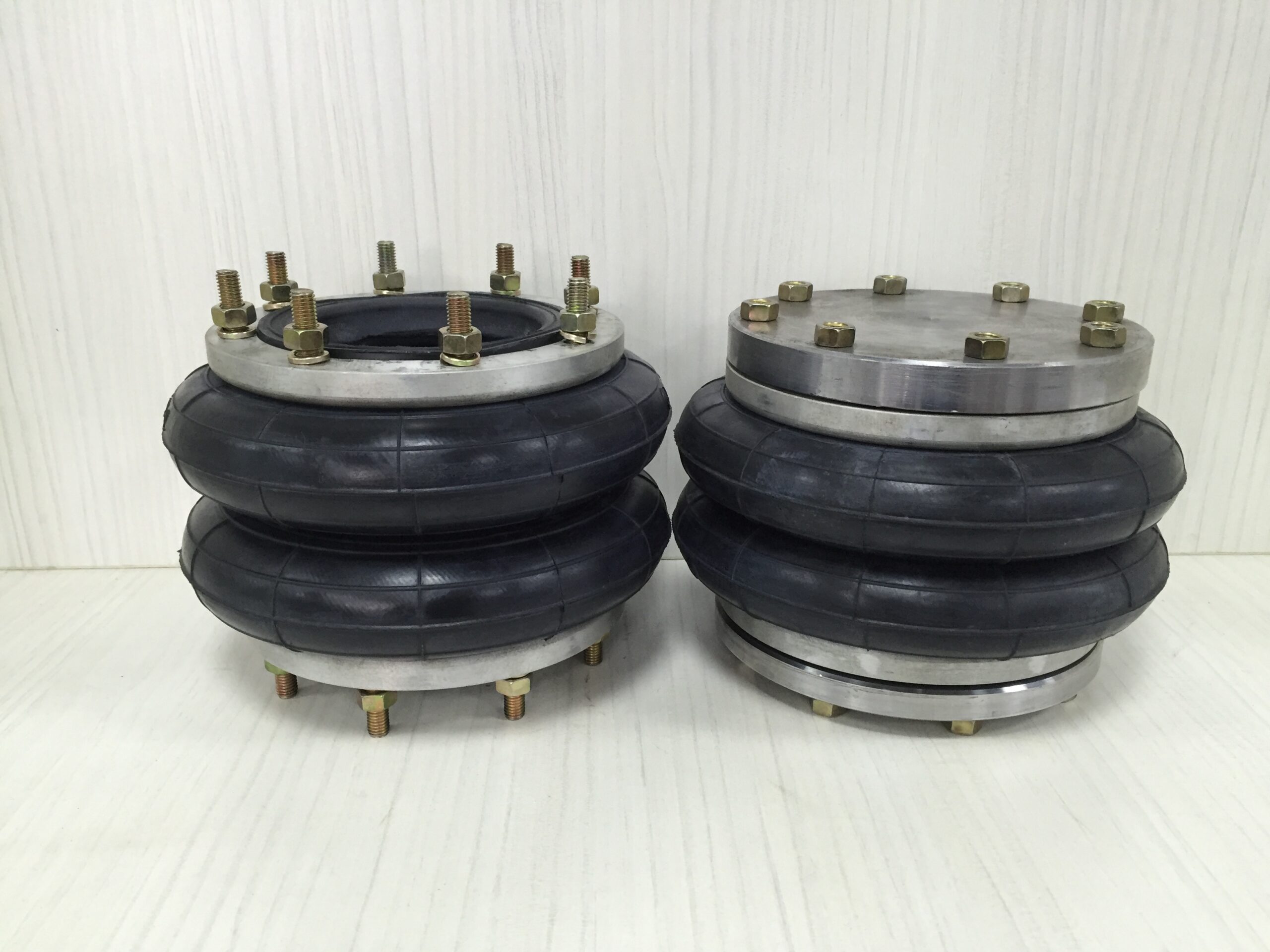
A rubber air spring combines flexible rubber with a controlled air chamber to isolate vibrations. The spring compresses under load, absorbs energy, and reduces transmitted vibrations to sensitive equipment, providing active vibration control for precision vibration tables.
High damping rubber allows the spring to dissipate energy efficiently while maintaining stiffness. By adjusting internal air pressure, the spring can tune its natural frequency to match operational requirements, minimizing resonance effects and enhancing measurement reliability.
In practice, a properly designed rubber air spring reduces micro-vibrations, prevents system oscillations, and protects instruments from fatigue caused by repetitive shocks. This makes it suitable for precision testing platforms, laboratory equipment, and industrial measurement systems.
Why Is Damping Efficiency Important for Precision Vibration Tables?
Damping efficiency determines how quickly a vibration table can dissipate energy and stabilize after a disturbance. High damping ensures precise measurement, reduces noise, and protects sensitive instruments.
Rubber air springs with high damping rubber allow energy to decay rapidly, avoiding prolonged oscillations that could distort test results. In precision vibration tables, even minor residual vibrations can compromise measurement accuracy, making damping a critical factor in performance evaluation.
Effective damping also reduces wear on components and extends equipment life. For industries requiring repeatable testing—such as aerospace, electronics, and automotive—efficient damping guarantees consistent, reliable operation.
What Are the Advantages of Using Specialized Rubber Air Springs over Conventional Springs?
Specialized rubber air springs are engineered for precision vibration tables, offering performance that conventional springs cannot match. They provide wider load adjustment ranges, higher fatigue resistance, and improved vibration isolation, enabling stable performance under dynamic conditions.
Conventional springs often fail under high-frequency or varying load conditions, resulting in resonance, excessive vibration, or inconsistent measurements. Specialized air springs maintain their elasticity, absorb shocks, and minimize data deviation, delivering reliable results over extended testing cycles.
Their durability, precision, and high damping capability also make them ideal for active vibration control, protecting both sensitive equipment and operators from excess vibration while ensuring compliance with strict testing standards.
How Do Rubber Air Springs Improve Stability in High-Precision Equipment?
By actively controlling vibration and providing adaptive load response, rubber air springs enhance equipment stability. This is crucial for high-precision machinery where even micro-vibrations can affect measurement accuracy or production quality.
The specialized air spring reduces oscillations and prevents resonance across different operational loads. Its combination of high damping rubber and air chamber design ensures stability, even in precision vibration tables operating under dynamic or unpredictable conditions.
Applications include precision testing of electronics, aerospace components, and semiconductor devices. In each case, the rubber air spring protects sensitive instruments while ensuring consistent performance, contributing to repeatable and trustworthy test results.
What Materials Are Commonly Used in Rubber Vibration Isolators?
High damping rubber, neoprene, and hydrogenated nitrile rubber are commonly used in rubber vibration isolators and air springs. These materials combine elasticity, chemical resistance, and long-term durability.
Material selection affects the spring’s stiffness, damping performance, and environmental adaptability. High damping rubber allows for efficient energy absorption, while durable elastomers maintain performance under repeated loading and exposure to temperature fluctuations or chemicals.
Properly selected materials ensure that the rubber air spring maintains vibration isolation efficiency, minimizes maintenance requirements, and supports the long-term reliability of precision vibration tables.
How Does Load Capacity Affect the Performance of a Rubber Vibration Table?
The load capacity of rubber springs directly affects the table’s isolation efficiency, stiffness, and natural frequency. Incorrect load matching can lead to reduced damping performance, excessive oscillations, or structural stress.
Specialized rubber air springs can be tuned to handle specific loads, ensuring optimal vibration isolation under varying operational conditions. Overloading or underloading compromises the air spring’s ability to maintain stability and accurate vibration control.
Understanding the load capacity of rubber springs is essential for configuring vibration tables to meet specific test requirements, guaranteeing precise and repeatable results for sensitive equipment.
What Industries Benefit Most from Rubber Vibration Tables with Air Springs?
Industries like aerospace, electronics, precision instrumentation, automotive component testing, and laboratory research benefit significantly from specialized rubber vibration tables. These tables ensure accurate testing, reduce errors, and maintain equipment longevity.
By providing reliable vibration isolation, rubber air springs protect delicate components, improve product quality, and enable compliance with rigorous testing standards. Precision vibration tables are essential for high-tech manufacturing, research laboratories, and quality control in production environments.
How to Select the Right Rubber Air Spring for a Specific Vibration Table Application?
Selecting the right air spring involves evaluating load capacity, frequency range, environmental conditions, and required damping efficiency. Customization ensures that the spring meets specific vibration table performance criteria.
Working with experienced manufacturers guarantees proper design, material selection, and testing. SongjiangFlex provides tailored solutions for precision vibration tables, ensuring the air spring performance aligns with industrial and laboratory requirements.
What Maintenance Is Required for Rubber Air Springs in Vibration Tables?
Routine maintenance of rubber air springs includes monitoring air pressure, inspecting for rubber aging, and checking seals for leaks. Proper care prolongs life and maintains vibration isolation efficiency.
Regular inspection prevents unexpected failures, ensures consistent air spring performance, and preserves precision measurement integrity. Well-maintained springs reduce downtime, lower replacement costs, and keep high-precision equipment operating at optimal performance. This is critical for ensuring long-term stability and reliability of the rubber air spring in any vibration table application.
Summary
Specialized rubber air springs define rubber vibration table performance. Proper selection and maintenance ensure precision, stability, and long-term operational reliability.